
Scams Aren’t New, Just Ever-Changing
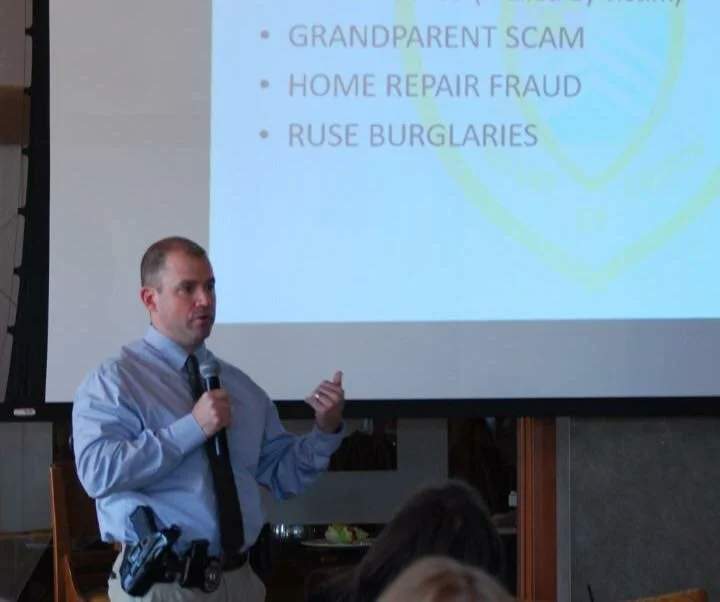
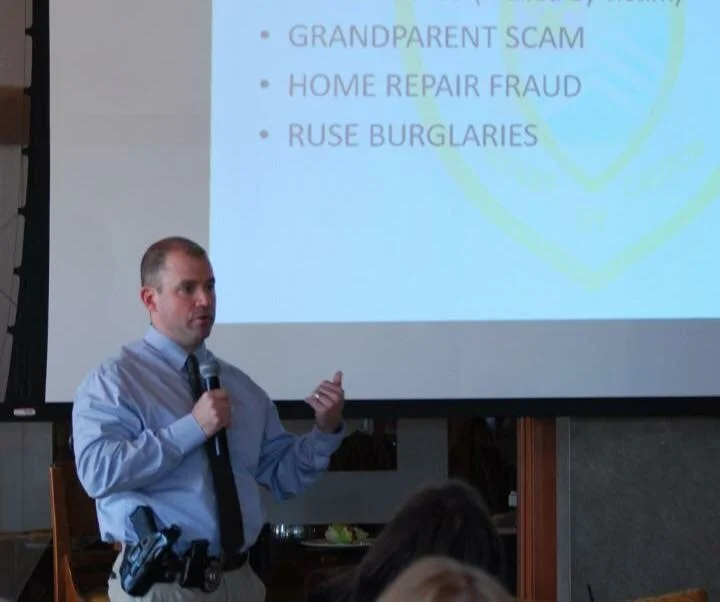
In the photo above, I was giving a community presentation as one of my assigned duties as a detective. This was in the Spring of 2016, almost exactly 10 years ago. At the time, these were the top issues facing residents in Lincolnshire, Illinois, a quaint northern suburb of Chicago.
Grandparent Scams involved a phone call to an unsuspecting grandparent claiming their dear grandchild has been kidnapped, arrested, or faced some other crisis requiring immediate cash. Facebook profiles with loose privacy settings would usually provide just enough information for a scammer to make a connection, but sometimes good old-fashioned slick talk played a role.
I worked one case where the victim didn’t have Facebook or social media. The victim was baffled as to how someone knew her grandson’s name, until we started discussing how the call went:
Victim/Grandparent: Answering call from unknown number, “Hello?”
Scammer: “Grandma, is that you? Grandma, this connection is terrible, can you hear me? Is that you?” (The fake bad connection makes grandma less suspicious of an unfamiliar voice/tone)
Victim/Grandparent: “Jack, is that you?” (Grandparent just inadvertently gave grandchild’s name)
Scammer: “Yes, it’s Jack. I’m in trouble. I need money.”
What’s changed in these type of scams now?
Technology. Now scammers can spoof numbers more easily to make it appear as if they are calling from law enforcement, government, or a family member’s number.
Anonymity. Anyone can get a fake phone number with the myriad of free phone and chat apps available today.
Fake Social Media Profiles. Anyone can pretend to be someone they aren’t.
How does this relate to where I’m at today? I’m retired from law enforcement, but as a licensed private investigator in North Carolina, I can still help people separate fact from fiction. I can still identify patterns of risk and deception. Of course if you’ve been scammed, you should contact law enforcement, file a report, and have them investigate.
Law enforcement is great at investigating crimes and keeping the public informed on latest trends, but they can’t help if you have a simple suspicion someone is scamming you or a family member. They won’t investigate if someone isn’t really who they represent themselves to be, unless a crime has already been committed.
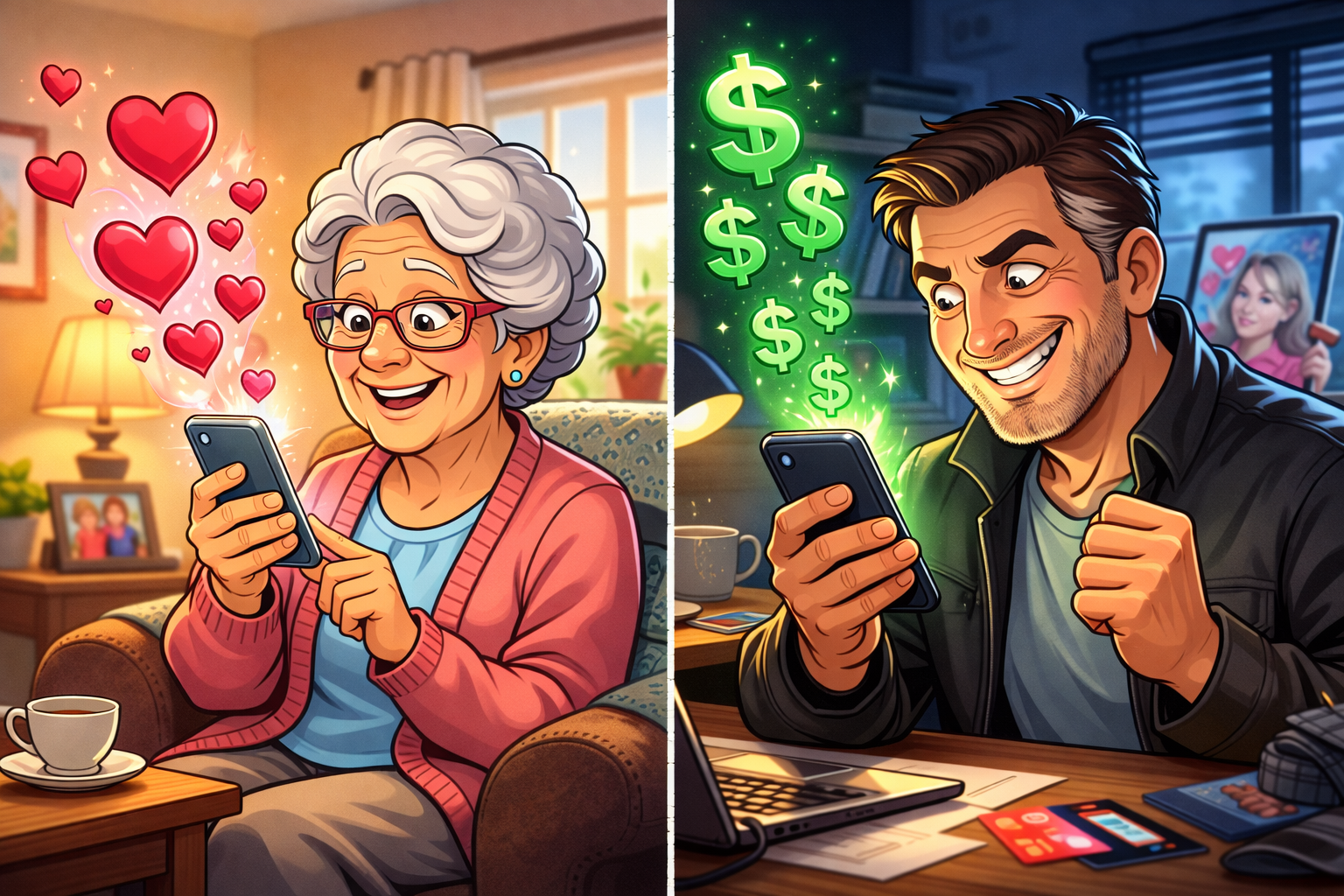
Brunswick County, a beautiful coastal region of North Carolina attracts many retirees. While grandparent scams may be less common now, romance scams aren’t. Many retirees have worked hard and built a sizeable net worth. Pensions, properties, boats, cars, luxury travel, etc. This makes them a prime target for romance scammers. Pesky technology makes it easier too. Spoofed numbers, fake social media profiles, and yes, the ever so popular dating apps.
Most romance scams don’t look like scams at first. They look like companionship. They look like someone “who finally understands.” They look like hope after loneliness.
A lonely retiree looking for love is a prime target for a scammer, which fall into two types:
-Distance romance: All interaction is online, by phone, etc. There is never a real meeting, but in between the flirting and cute messages, inevitable requests for money.
-In-person romance: These are the scammers that meet in-person. These can be short or long-term. Short-term means maybe they just meet for some adult fun, a weekend trip or two, some bonus gifts during the short encounter, or at worst, perhaps steal some bank account info or credit card info. These are probably pretty easy to spot. The long-term scammers can be more difficult. They are in it for the long-haul, marrying someone just to have access to, and eventually take over of inherit, whatever estate the victim has worked so hard to build.
People get prenuptial agreements, or “prenups” all the time, but that doesn’t help a potential victim before they get married, engaged, or are in a long-term non-marital relationship. That’s why it’s not far fetched to think premarital or pre-engagement background checks are worthwhile.
What makes these type of background checks different from employment background checks?
Confidential & Discreet: As long as you are NOT conducting a background check for employment or insurance purposes, the other party does not need to consent or be notified of a background check. Backgrounds for employment or insurance purposes, the federal FCRA applies. This means you can quietly learn about red flags, or verify this person is who they claim, giving you clarity and confidence to continue.
An online background check might indicate no felonies, no criminal record, or otherwise “clean,” but exploitation rarely shows up in a quick database search. Real risk shows up in patterns:
• Multiple elderly partners
• Frequent relocations
• Civil judgments
• Bankruptcies
• Financial instability
• Rapid relationship escalation
• Encouraging secrecy or isolation
When someone is being added to accounts, deeds, trusts, or will, you don’t need a $15 data report or just a Google search. You need clarity and an impartial professional who can not just look at raw data, but who can identify patterns and other potential areas of concern.
The tools may change, but the deception doesn’t. Recognizing it early is what makes the difference.
Romance Scams
When Mom or Dad has a new romantic partner… and significant assets.
Most romance scams don’t look like scams at first.
They look like companionship.
They look like someone “who finally understands.”
They look like hope after loneliness.
An online background check might say:
✔️ No felonies
✔️ No warrants
✔️ Clean record
But exploitation rarely shows up in a quick database search.
Real risk shows up in patterns:
• Multiple elderly partners
• Frequent relocations
• Civil judgments
• Bankruptcies
• Financial instability
• Rapid relationship escalation
• Encouraging secrecy or isolation
When someone is being added to accounts, deeds, trusts, or wills…
you don’t need a $29 data report.
You need clarity.
Peace of mind is often worth more than the search.
Discreet. Verified. Professional Skill. Personal Commitment.
If you’re quietly concerned about a parent or high-net-worth loved one, reach out privately.